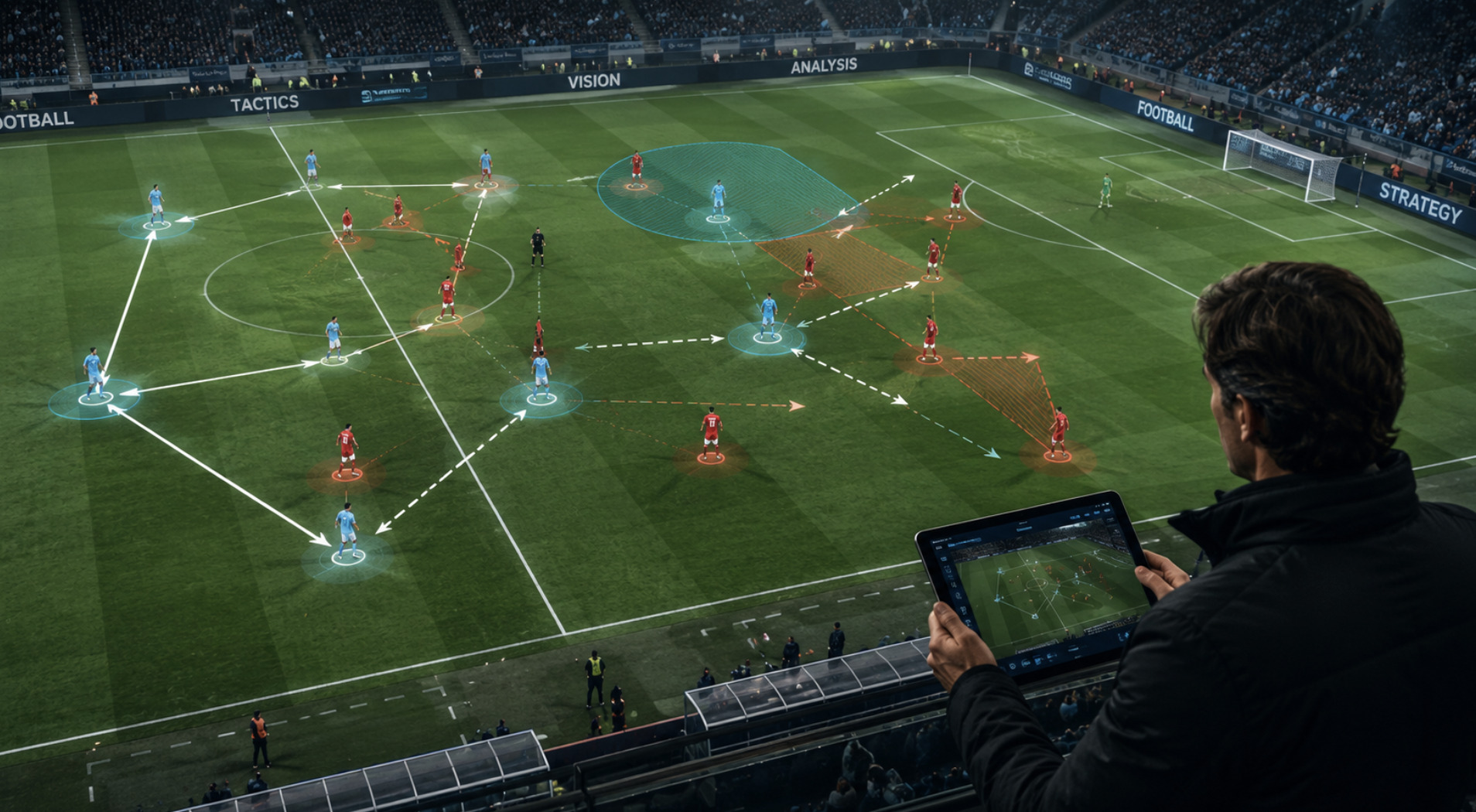
Most people watch football by following the ball. It is the natural thing to do — the ball is where the action is, where the goals come from, where the drama lives. But coaches, analysts, and the players themselves are watching something else entirely: the space around the ball, the shapes the teams make, the patterns repeating minute after minute. Learn to see the game their way and a match transforms from a series of exciting moments into a coherent tactical story. This guide shows you how to start reading football like the people who play and coach it.
Stop following the ball
The single most important habit to break is ball-watching. When your eyes lock onto the ball, you see only a tiny fraction of what is happening — the eleven-versus-eleven battle collapses into a two- or three-player scramble in one small area. Everything that decides matches, the positioning of the other eighteen players, happens in the space you are not looking at.
The fix is deliberate but powerful: occasionally pull your gaze away from the ball and watch the players without it. Notice how the striker drifts into a pocket of space before the pass arrives, how the full-backs push high while their team attacks, how a midfielder quietly shuffles across to protect a gap. This is where the game is actually won and lost. Watching a replay or a wide-angle broadcast helps, because it lets you see the whole pitch at once. Once you train yourself to watch space rather than the ball, you cannot un-see it — and the game becomes twice as rich.
Recognise the shape of each team
Every team plays with an underlying structure, usually described by a formation — a back four, three central midfielders, two wingers, and so on. But the number on the team sheet is only a starting point. What matters is how that shape lives and breathes during the match: how it changes when the team has the ball versus when it does not.
The crucial insight is that formations are fluid. A team that lines up as a 4-3-3 on paper might defend as a compact 4-5-1 and attack as a 2-3-5, with full-backs surging forward and midfielders rotating. Learning to spot a team's shape in and out of possession tells you what the coach is trying to achieve — where they want to build, where they concede space by design, and where the dangers lie. Watch how the eleven players move as a connected unit rather than as individuals, and the abstract idea of a "system" becomes something you can actually see on the grass.
Understand pressing and where it happens
One of the defining features of modern football is the press — the coordinated attempt to win the ball back, and where on the pitch a team chooses to do it. Some teams press high, hunting the ball near the opponent's goal to force mistakes in dangerous areas. Others sit in a mid-block or drop into a low block, inviting the opponent forward and defending their own third in numbers.
Reading the press means asking a few questions as you watch. When the opponent has the ball, does this team rush to close them down immediately, or do they retreat and hold their shape? What is the trigger — a backward pass, a heavy touch — that sets the press in motion? And crucially, what happens to the space behind the press when it is beaten? High pressing is aggressive and rewarding but leaves gaps in behind; deep defending is safer but cedes territory and initiative. Neither is right or wrong; they are choices, and seeing which one a team makes reveals the entire logic of their game plan.
Watch the battle for the middle
Midfield is where most matches are decided, yet it is the area casual viewers understand least because the ball spends less dramatic time there. The contest for control of central midfield — who has more players there, who wins the second balls, who dictates the tempo — usually determines which team imposes itself on the game.
Pay attention to the numerical battle in the centre. A team that overloads midfield, putting three against two, tends to control possession and rhythm, forcing the opponent to react. Watch how teams try to create or exploit these overloads: a winger tucking inside, a striker dropping deep, a defender stepping into midfield. When one team suddenly starts dominating a match, the cause is very often a shift that won them the midfield, even if the visible drama is happening elsewhere. Learn to watch the centre of the pitch and you will frequently see momentum change before the scoreboard does.
Notice the patterns, then the adjustments
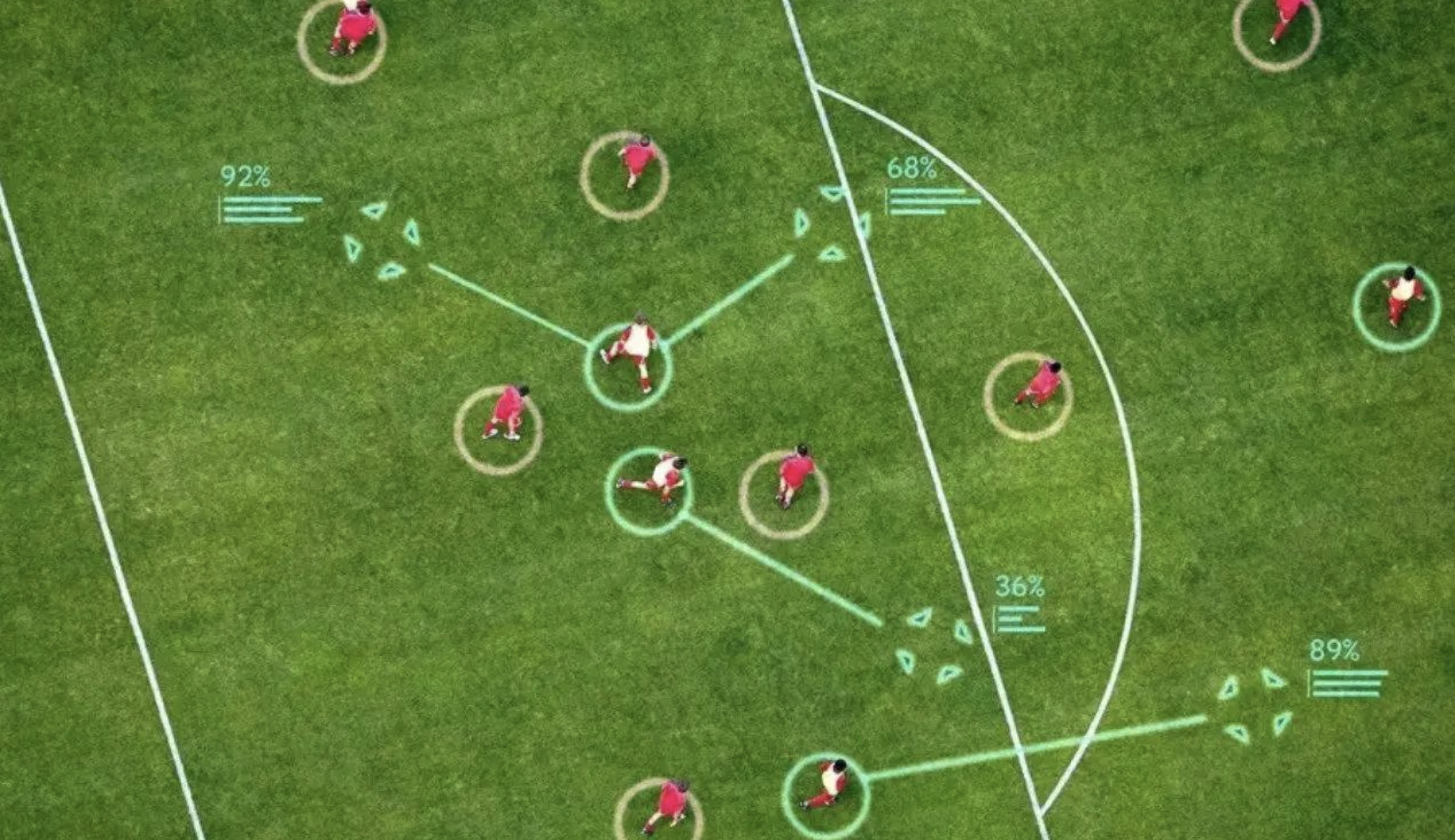
Good teams do not attack randomly; they have rehearsed patterns — repeatable ways of moving the ball into dangerous areas. The same combination down the left, the same diagonal switch to an isolated winger, the same run in behind from a particular player. Once you start looking, these patterns become obvious, and spotting them lets you anticipate what a team will try before it happens.
Even more revealing is what happens when a plan is not working. This is where coaching becomes visible. A manager who sees their patterns being smothered will adjust — moving a player, changing the point of attack, altering the press. Watching for these in-game adjustments, and the substitutions that signal them, is one of the great pleasures of tactical viewing. A match is a live argument between two coaches, each responding to the other, and the mid-game tweak that unlocks a stubborn defence is often the real decisive moment, quietly made twenty minutes before the goal it produced.
Judge players by what they do off the ball
Finally, reading the game like a coach means re-evaluating what makes a player good. On television, the players who stand out are the ones with the ball — the dribblers and scorers. But coaches prize the work that never makes a highlight reel: the defender who is always in the right position, the midfielder whose movement creates space for others, the striker whose runs drag defenders away even when the pass never comes.
Start watching individual players when they are not involved in the immediate action. Notice who is constantly scanning, adjusting their position, communicating, doing the unglamorous work that holds a team together. You will develop an appreciation for players that statistics and highlights miss entirely — and you will understand why coaches sometimes build teams around names that casual fans overlook. The best off-the-ball players are the invisible architecture of a good side.
Conclusion
Reading a football match like a coach is a skill anyone can build, and it costs nothing but attention. Stop following the ball and watch the space; learn to see each team's shape in and out of possession; understand where and how they press; track the battle for midfield; spot the attacking patterns and the adjustments that counter them; and judge players by their work off the ball. None of this requires a coaching badge — just a willingness to look at the whole pitch instead of the small patch around the ball. Do it for a few matches and something clicks: the game slows down, the chaos resolves into structure, and you start seeing the beautiful, deliberate contest that was there all along.