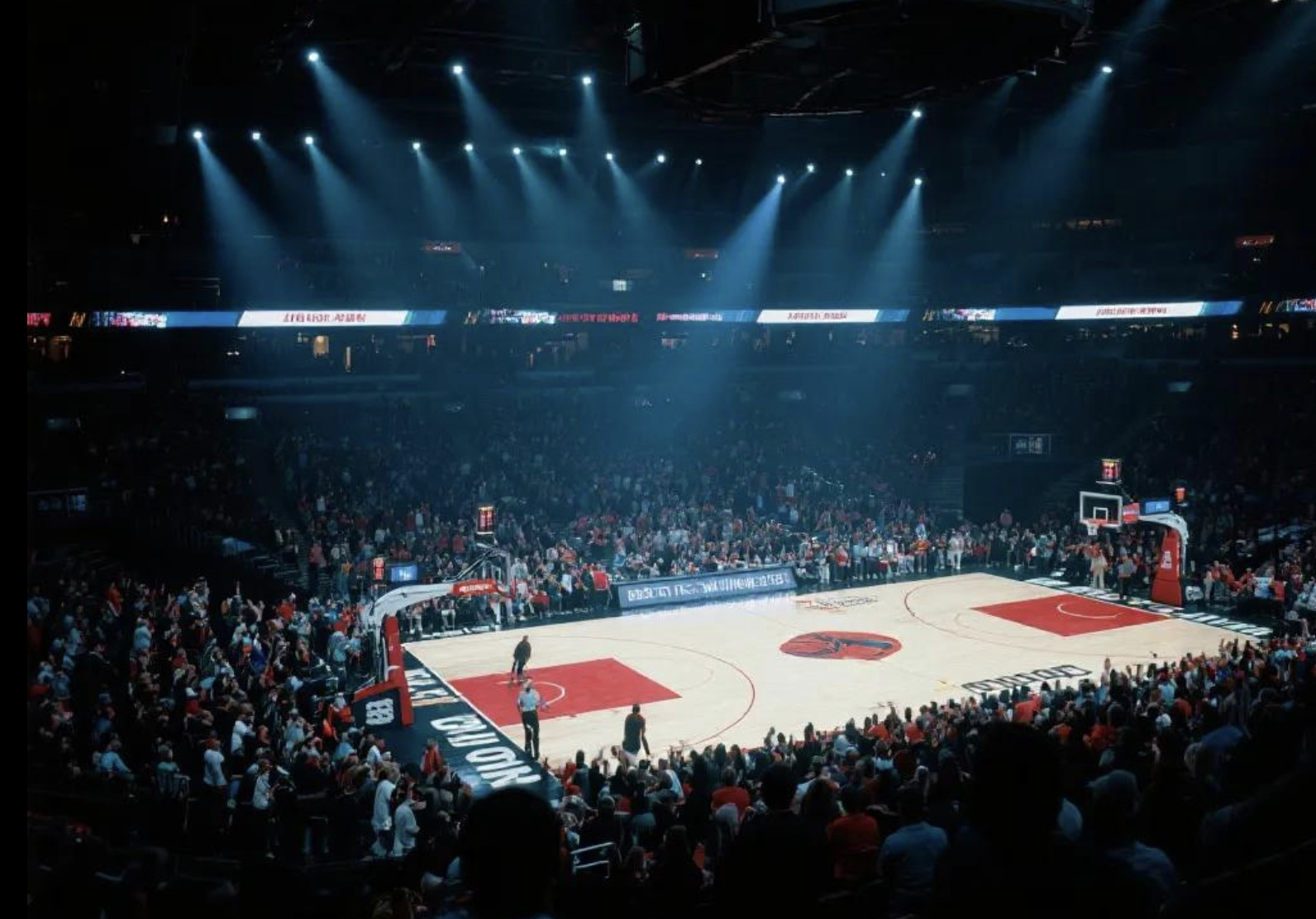
The first round of the 2026 NBA Playoffs delivered what the bracket promised: a Game 7 between the 76ers and Celtics that averaged 11 million viewers on NBC/Peacock — the most-watched first-round Game 7 in league history — and a Nuggets-Timberwolves series that once again proved why that rivalry is the most compelling in the West. Now eight teams remain, the second round is underway, and every series already has a defining narrative.
Here is the complete breakdown of where things stand, what happened in Game 1 of each series, and what the data says about how this bracket plays out from here.
Oklahoma City Thunder vs. Los Angeles Lakers
The reigning champions arrived in the second round undefeated in these playoffs, having swept Phoenix in the first round without dropping a game. Game 1 against the Lakers confirmed that OKC's machine is still running.
Chet Holmgren delivered a signature performance: 24 points and 12 rebounds. The Thunder ran the Lakers off the floor, winning 108-90 in a result that was not nearly as close as a final margin of 18 suggests. OKC led wire-to-wire, and the Lakers never found any sustained offensive rhythm against a defensive structure that has been the league's best for 18 months.
The Lakers had earned their place here by eliminating Houston in the first round, but this feels like a significant mismatch. OKC's depth, which has been the story of this entire franchise rebuild, proved too much in Game 1. The bench outscored LA's bench by double digits.
What to watch in Game 2: Whether the Lakers can find a way to keep possessions alive long enough to generate second-chance opportunities. Against OKC's switching defense, isolation attempts are regularly snuffed out. LA needs offensive creativity, not just individual talent.
Series Outlook:
FactorOKC ThunderLA LakersSeed#1 West#4 WestRegular Season W/LBest in WestEliminated Houston in R1Defensive RatingElite (#1)AveragePlayoff momentumSweep + Game 1 WFirst round survival
Win probability: OKC 78% | Lakers 22%
Minnesota Timberwolves vs. San Antonio Spurs
Timberwolves lead 1-0
This series produced the moment of the playoffs so far — and possibly the moment of the decade in NBA defensive basketball.
Victor Wembanyama finished Game 1 with 11 points, 15 rebounds, and 12 blocks — a new NBA postseason single-game record, surpassing the mark of 10 that had stood jointly under Mark Eaton (1985), Hakeem Olajuwon (1990), and Andrew Bynum (2012). Wembanyama matched the old record of 10 in just three quarters. He broke it minutes into the fourth by stuffing Anthony Edwards at the rim. It was only his fifth career playoff game.
It was also not enough. The Timberwolves won 104-102 on a final possession that ended with Julian Champagnie's buzzer-beating three-pointer coming up just short.
The result contains layers worth unpacking. Wembanyama was genuinely unguardable at the rim — the Timberwolves shot an extraordinary number of misses, in part because driving into the paint meant near-certain rejection. But his offensive contribution was limited: 5-of-17 from the field, 0-of-8 from three. The Spurs' offense, centered around 18-point performances from Dylan Harper off the bench, simply could not generate enough clean looks.
The Timberwolves came in battle-tested, having just eliminated Denver in what multiple observers called the series of the first round. Julius Randle led Minnesota with 21 points and 10 rebounds. Six Timberwolves finished in double figures — the kind of depth that matters in a seven-game series against a team built around one transformative player.
The subplot that will define Game 2: Anthony Edwards. Expected to miss at least Game 3 after a bone bruise and hyperextended knee suffered on April 25, Edwards returned in Game 1 off the bench, played 25 minutes, and scored 18 points including 11 in the first five minutes of the fourth quarter. If Edwards is close to full health for the rest of this series, San Antonio has a serious problem.
The officiating subplot adds another layer. Timberwolves coach Chris Finch stated postgame that his staff counted at least four instances where goaltending should have been called on Wembanyama's blocks. Rudy Gobert was characteristically dry in response: "I want that type of treatment, too." Whether the officials adjust in Game 2 will be worth monitoring.
Win probability: Timberwolves 62% | Spurs 38%
New York Knicks vs. Philadelphia 76ers
Knicks lead 1-0
The Knicks opened their Eastern Conference semifinal against the 76ers the same way they ended the first round: with a blowout.
Game 1 was not close. New York came out with the same intensity and structure that dismantled Atlanta in the first round, and Philly — who had just survived an epic seven-game war against Boston — showed the fatigue that a deep first-round run produces. Jalen Brunson was dominant throughout, his ability to create offense in both isolation and pick-and-roll situations presenting matchup problems that Philadelphia's defensive scheme could not consistently solve.
The 76ers have serious questions to answer before Game 2. Their first-round series against Boston required every game, and the physical and mental cost of that series is visible. Their defensive rotations were a step slow in Game 1, and Brunson exploited every gap.
The key variable: Joel Embiid's load management decisions. Embiid played significant minutes in all seven games against Boston. If the Sixers' medical staff is managing his minutes carefully in a long series, the team's ceiling drops considerably.
Win probability: Knicks 65% | 76ers 35%
Detroit Pistons vs. Cleveland Cavaliers
Pistons lead 1-0
Detroit was the top seed in the East for a reason, and Game 1 demonstrated exactly why. Cade Cunningham scored 23 points and Tobias Harris added 20 as the Pistons asserted themselves early against Cleveland, winning 111-101 in a performance defined by rebounding, defense, and 3-point shooting.
The result was notable for what it showed about the Pistons' evolution. This is not a team built around one moment or one star — it is a systematically constructed roster with multiple contributors, excellent spacing, and a defensive identity that has held up throughout the playoffs.
Cleveland, despite a strong regular season, has looked like a team that peaked at the wrong moment. Their first-round series was competitive enough, but the Pistons represent a significant step up in quality, and Game 1 made that clear.
The storyline to watch: Donovan Mitchell's ability to manufacture offense in isolation when Detroit's switching defense takes away the Cleveland pick-and-roll. Mitchell was held in check in Game 1. His response in Game 2 will define whether this series becomes competitive or whether Detroit simply controls it.
Win probability: Pistons 70% | Cavaliers 30%
Full Bracket Win Probabilities
SeriesTeam AOddsTeam BOddsWestOKC Thunder 🏆78%Lakers22%WestTimberwolves62%Spurs38%EastKnicks65%76ers35%EastPistons70%Cavaliers30%
Conference Finals Projection
Assuming the higher probabilities hold, the matchups most likely to emerge are:
West: OKC Thunder vs. Minnesota Timberwolves This would be the series of the playoffs. The reigning champions against the team with the best first-round credentials and a fully healthy Anthony Edwards. Wembanyama vs. Holmgren. Two defensive juggernauts. OKC's experience advantage would be decisive, but this is the series most likely to go seven.
East: New York Knicks vs. Detroit Pistons The two best teams in the East conference all season. The Knicks have the star power in Brunson; the Pistons have the system depth. Both teams have been consistently excellent throughout these playoffs without showing major vulnerabilities.
Championship outlook:
OKC Thunder: 41% (defending champion, deepest roster)
Detroit Pistons: 24% (top seed East, most complete team in conference)
Timberwolves: 19% (Ant Edwards wildcard + Wembanyama series uncertainty)
Knicks: 16% (dependent on Brunson staying at current level)
The Wembanyama Question
Before we close: what Wembanyama did in Game 1 deserves a separate acknowledgment beyond the record.
Twelve blocks in a single playoff game. The previous record was 10, last reached in 2012. It had only been matched three times in the entire history of tracked statistics. Wembanyama broke it in his fifth career playoff game, in only his third NBA season.
The paradox is what makes it fascinating: he was simultaneously the most dominant player on the floor and the reason his team lost. His defensive wall was so complete that Minnesota could not find a path to the rim — so they scored from everywhere else, finishing the game despite 50 misses.
The Spurs lost because Wembanyama's offensive limitations were exploited. The 76ers lost because Wembanyama's offensive limitations are being addressed. That tension — between what he already is and what he is still becoming — is the central basketball question of the next decade.
Game 2 is in San Antonio. The series is now defined by whether the Spurs can find enough offensive output to complement what is already, on the evidence of Game 1, the most disruptive defender the league has seen since the Bill Russell era.