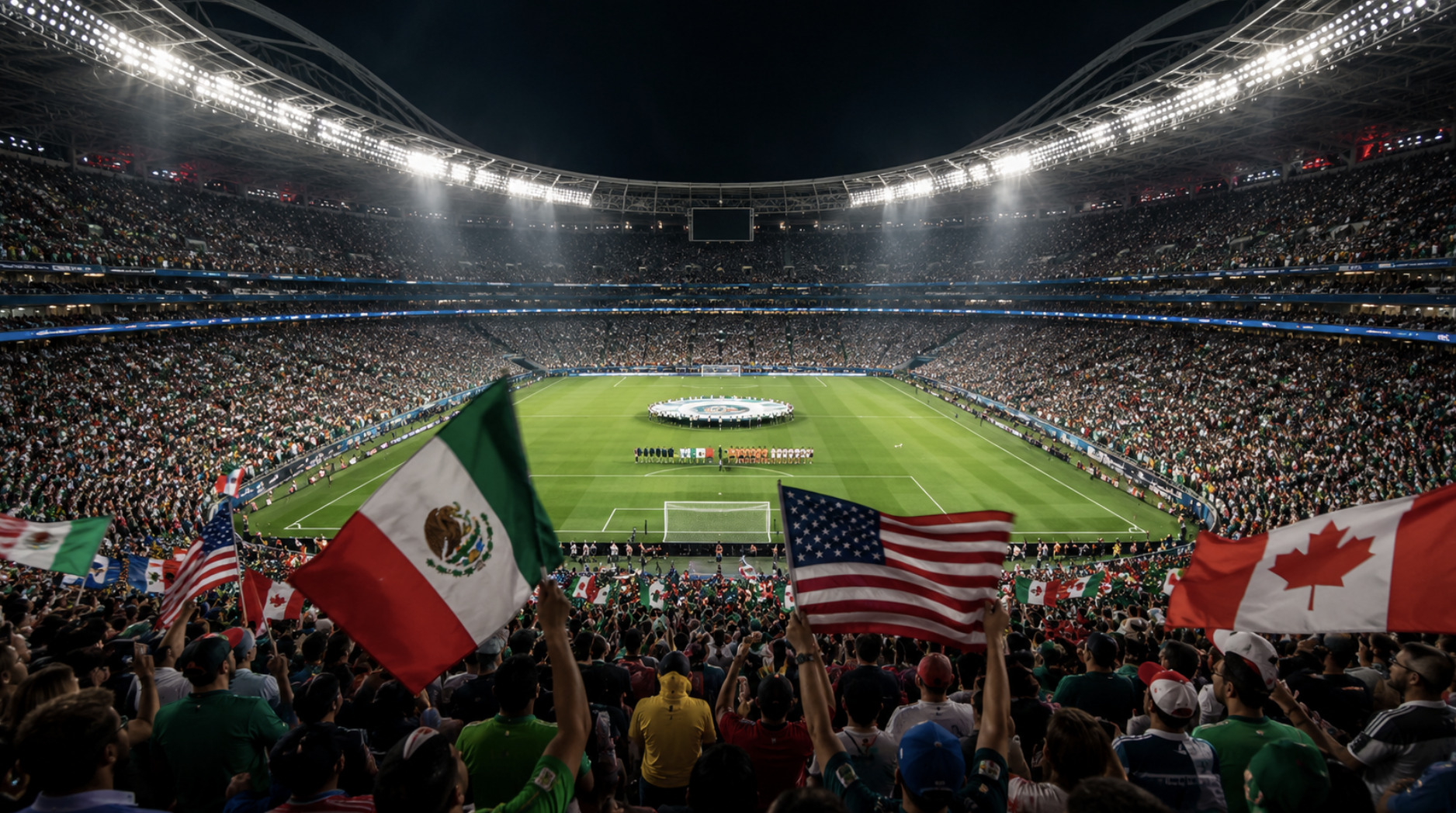
On June 11, when Mexico and South Africa walk out at the Estadio Azteca, they will start the largest World Cup ever staged. The 2026 edition expands from 32 teams to 48, from 64 matches to 104, and from a roughly month-long event to a 39-day marathon spread across the United States, Canada, and Mexico. Those are the headline numbers, and they have been repeated everywhere. What has been discussed far less is how profoundly the new structure changes the competition itself — not just its size, but its strategy, its risk profile, and the kind of team it quietly rewards.
Twelve groups, and the maths of the eight best third-placed teams
The old format was clean: eight groups of four, top two advance, sixteen teams into the knockouts. The new one breaks that symmetry. Forty-eight teams are split into twelve groups of four, labelled A through L. The top two from each group advance automatically, which accounts for twenty-four teams. The remaining eight knockout places go to the eight best third-placed sides, ranked across all twelve groups by points, then goal difference, then goals scored.
That single mechanism changes how the group stage feels. In a four-team group where third place can still be enough, the incentive to chase a win in the final round shifts. A team sitting on three or four points is no longer necessarily desperate; it may already be on course to sneak through as a leading third-placed side. The result is a group stage where the cost of caution drops, and where the final round of fixtures becomes a league-table calculation as much as a contest — sides watching not only their own group but the points tallies in eleven others to know exactly what they need.
The Round of 32: a brand-new door, and the biggest upset window
The most consequential structural change is the addition of an entirely new knockout round. The bracket now opens with a Round of 32 before the familiar Round of 16, quarter-finals, semi-finals, and final. It is the only addition to the knockout architecture, and it is the single most dangerous stage in the tournament for a favourite.
The reason is simple. The Round of 32 throws group winners — including elite seeded nations who have barely been tested in soft groups — straight into a one-off knockout against battle-hardened qualifiers, some of whom scraped through as third-placed teams and have nothing to lose. A top side that cruised through its group on autopilot can find itself, in its very first knockout match, facing an opponent in form, organised, and utterly unafraid. Historically, the earliest knockout rounds are where the biggest names are most vulnerable, because the gap between preparation and intensity is widest. The new Round of 32 manufactures exactly that situation, and it does so for thirty-two teams at once.
The geography problem, and why deep squads win
Staging a tournament across three countries and roughly four thousand miles forced FIFA into a regional cluster system. The sixteen host cities are grouped into western, central, and eastern clusters, and most teams play their three group matches within a single cluster to limit travel. Once the knockouts begin, though, those constraints loosen, and a team can be sent across the continent for its next match. By the quarter-finals, the tournament consolidates into the United States.
This matters more than it sounds. Travel, heat, altitude, and time-zone shifts across North America impose a physical tax that the compact tournaments of recent memory did not. The 39-day calendar gives more recovery time between knockout rounds than 2022 offered, which sounds like relief — but it primarily benefits squads with genuine depth, the teams that can rotate, rest a tiring star, and bring on a starter-quality replacement without dropping a level. A nation carrying eleven excellent players and little behind them will feel the length and breadth of this tournament far more than one with a deep, flexible bench. The expanded format does not just add games; it rewards resource.
Seeding the giants apart
FIFA has also engineered the bracket to protect its marquee fixtures. The four top-ranked nations were placed into opposite quadrants, so that the strongest seeds cannot meet until the semi-finals at the earliest. For the favourites, that means a theoretical path deep into the tournament without crossing another elite side — provided they survive the Round of 32 ambush that the same structure sets for them. It is a deliberate balance: the format spreads the giants apart to preserve blockbuster late-stage matchups, while the extra early knockout round ensures none of them can sleepwalk to get there.
What kind of champion this format produces
Put the pieces together and a profile emerges. The 2026 World Cup favours teams that are deep rather than merely talented, adaptable to wildly different conditions across a continent, and mentally sharp enough not to drift through a forgiving group only to be caught cold in a sudden-death opener. It punishes complacency early and rewards stamina late. It gives smaller nations more ways in — both through the expanded field and through the best-third-placed route — and more belief once they arrive, because the Round of 32 hands them a single game against a favourite who has more to lose.
The romantic reading is that a bigger tent means more stories, more debutants, more nights when a country that has never been here gets its moment on the sport's largest stage. The strategic reading is that the path to the MetLife Stadium final on July 19 is now longer, more physically punishing, and studded with more trapdoors than any World Cup before it. Both are true. The tournament has not merely grown. It has changed shape, and the teams that understand the new shape — not just the new size — will be the ones still standing in New Jersey.